What is it that I do..? I guess I really do not do much, not much that makes a difference to anyone...or maybe I just do not see it?
The S.B. 1955 Health Insurance Marketplace Modernization and Affordability Act was defeated!!
I would like to think that writing letters to my representatives made a difference, but they were likely not too influential...maybe a drop in the hat. Really, there is no way to tell, is there...unles maybe I were to make appointments with my Senators and ask them if mail from constituents made a difference or at least was a variable in their decision making process.
There are many organizations out there that exist to help inform votes, to serve as a gateway to make voters and link them into the system. In past blogs I discussed like Moveon.org and other political action committees like Democracy for America.
Then there are organizations like Congress.org that serve as a portal to link people into bills in the House and Senate and that also help people to immediately discover who their representatives are by entering a zip code.
But what are these things, what is the point of them if no one is using them? I wonder who uses them....you can use them...I use them...I hope this is a habit I can keep.
Friday, May 26, 2006


Picking Up and Taking Off
Perhaps Americans are politically depressed? Am I?
How can we make change if we do not feel we have a voice.
What we need is a sense of agency, a sense of being able to run with a candidate and watching that candidate take office. We need a sense that not only will our voice be heard, should we speak up but also that if we take action we will see a difference.
I guess after watching so many things happen and none of them being what you want or what it in your interest it is easy to let go and give up....
so what can we do?
Take a nap, get rested and then PICK yourself UP and TAKE OFF!
Find a cause to get behind and keep at it.
A little at a time, and eventually...if nothing else, you might feel better, feel the self-righteous satisfaction of knowing that you tried.
How can we make change if we do not feel we have a voice.
What we need is a sense of agency, a sense of being able to run with a candidate and watching that candidate take office. We need a sense that not only will our voice be heard, should we speak up but also that if we take action we will see a difference.
I guess after watching so many things happen and none of them being what you want or what it in your interest it is easy to let go and give up....
so what can we do?
Take a nap, get rested and then PICK yourself UP and TAKE OFF!
Find a cause to get behind and keep at it.
A little at a time, and eventually...if nothing else, you might feel better, feel the self-righteous satisfaction of knowing that you tried.
Friday, May 19, 2006
Making Change, Managing Overwhelming Circumstances
Change is hard, not just the kind that takes you by surprise, but the kind that you propel yourself toward. Here are some tops on how to propel toward a difference through incremental change and the sense of being overwhelmed. I offer this advice as someone who as lived it as well as someone who has often advised others.
Tips:
1. Clearly define goals, not just the big things…operationalize, come up with the signposts so you know you are close to your goals as well as the steps (the pathways) for getting to them.
2. Identify pitfalls, barriers, hardships, and potential holdups, put this list in your journal
3. Make a timeline and consider not only the signposts but also places where you should sit down and reassess your strategies, make a couple…
6. Post your accomplishments
7. Keep a list of what you have yet to achieve
Tips:
1. Clearly define goals, not just the big things…operationalize, come up with the signposts so you know you are close to your goals as well as the steps (the pathways) for getting to them.
2. Identify pitfalls, barriers, hardships, and potential holdups, put this list in your journal
3. Make a timeline and consider not only the signposts but also places where you should sit down and reassess your strategies, make a couple…
- a. best case scenario with no hold ups
- b. okay and delayed scenarios
- c. and then the scenario that you are hoping will never ever come true…
- a. what you want
- b. if it is still what you want
- c. if your strategies for getting there are feasible and enjoyable
6. Post your accomplishments
7. Keep a list of what you have yet to achieve
Tuesday, May 09, 2006
Its Health Week in DC: Tell your Representatives What you want and Why you might Vote for them

This week Congress is addressing the complex issue of health insurance.
I wish I had more to say, more ideas to share to help devise a way to give all Americans health insurance, which at least seems to be a goal shared by Democrats, Republicans, and Independents in Congress.
All I can do is vote and remind people in government that I vote, its what I do, I vote for them and it puts them in office, but I do not just vote for the hell of it, I vote for people who serve my interests.
I vote for people who I believe will do what is best for America and especially for people who are economically disadvantaged.
What I have done, all I can do is to tell my representatives in the Senate that they should be working to not only help more if not all American to have health insurance but also to ensure that health insurance providers be regulated and required to provide preventative care screenings in addition to a myriad of services that are necessary to promote productive, healthy, and happy lives for all regardless of age, gender, religion (and hopefully soon economic standing).
In addition to blocking two other bills that would limit patients' financial gains from malpractice suits, Democrats in the Senate have also committed themselves to finding a way to make health insurance affordable.
Democrats have a limited time to address the cost of health insurance, although the Washington Post article by Kevin Freking states that the democrats have not ruled out a filibuster, as of 10:00 am today the Senate voted 96-2 to invoke Cloture on the Motion to proceed to S. 1955; Health Insurance Marketplace Modernization and Affordability Act of 2005.
Apparently the democrats are putting together an alternative bill that would help small businesses to insure their workers, the new bill is expected to mimic the health insurance for federal workers.
However, the question is if hey will be able to maintain state regulations on benefits. According to the article, some small business plans are already exempt from State regulations. This is perhaps the biggest issue of all, how to keep health care affordable while maintaining a commitment to fight preventable diseases through early screenings, immunizations, and treatments.
Following issues is an important part of involvement. I was lucky enough to be alerted to S. 1955, I investigated it, and I have followed its progress. I wish I had more ideas of how to keep insurance premiums down while also promoting preventative care!
The sense of not being informed and able to offer constructive criticism is probably the most defeating feeling of citizenship.
I am not an expert, I barely have a clue on how to resolve this issue, and I certainly do not have enough information, but I do have an opinion about what is best for me and for fellow citizens. All I can do, the least that I can do...or is it the most that I can do??? Is to tell my representatives what I want and to remind them that my next vote in their favor is dependent on their actions, is dependent on how well they represent my interests!
Thursday, May 04, 2006
Be Vigilant and Protect States Rights to Regulate your Health Care Coverage
Everyone deserves health care coverage, but what is the coverage worth if you still cannot afford necessary tests? 
I don’t want the government to have to be involved in the choices I make, but I also want people to have access to affordable health insurance and health care!
Apparently, we need regulation to ensure that all Americans get the health care they deserve. Because different areas have different needs as well as different values, regulation of individual choices are probably best kept at the State level...It is a complicated issue, one further complecated by the particular needs of women.
I first heard about this issue after I receiving a Take Action Alert from Planned Parenthood. Without this message, I would not have known that there was legislation regulating my health insurance. After reading the Action Alert, I immediately took the two minutes they said it would take to slightly edit their form letter and email it to my representatives.
But not wanting to be a complete chump, I checked around to see the bill and try to understand why other people supported it.
Ultimately, I am glad I wrote my resentatives to tell them that I opposed the Health Insurance Marketplace Modernization and Affordability Act of 2005 bill S. 1955 .
According to Tom Stevens an Op-Ed in The Hill on May 2, 2006, S. 1955 is a reason to thank the government for looking out for our health care needs, for making health insurance affordable for SMALL BUSINESSES.
Ethan Heitner at TomPaine.com points out what I would expect more Repulicans to take note of, that S. 1955 is looking to flatten State's Rights and impose a "one size fits all" policy that would ultimately benefit health insurance companies more so than small business or clients.
Although I have my doubts about some services being necessary, when I consider how many children in the world need good parents, I am not certain I would want to take away a woman’s access to something like infertility treatment.
If you are wondering what services you could lose in your home state, you can find out at Planned Parenthood http://www.ppaction.org/network/himmaa.html.
If you are ready to take action, and show your oppostition to S. 1955 go here: http://www.ppaction.org/campaign/benefits2
Please also go this site to learn more about how to get your insurance in your state to COVER YOUR PILLS!!!
http://www.covermypills.org/

I don’t want the government to have to be involved in the choices I make, but I also want people to have access to affordable health insurance and health care!
Apparently, we need regulation to ensure that all Americans get the health care they deserve. Because different areas have different needs as well as different values, regulation of individual choices are probably best kept at the State level...It is a complicated issue, one further complecated by the particular needs of women.
I first heard about this issue after I receiving a Take Action Alert from Planned Parenthood. Without this message, I would not have known that there was legislation regulating my health insurance. After reading the Action Alert, I immediately took the two minutes they said it would take to slightly edit their form letter and email it to my representatives.
But not wanting to be a complete chump, I checked around to see the bill and try to understand why other people supported it.
Ultimately, I am glad I wrote my resentatives to tell them that I opposed the Health Insurance Marketplace Modernization and Affordability Act of 2005 bill S. 1955 .
According to Tom Stevens an Op-Ed in The Hill on May 2, 2006, S. 1955 is a reason to thank the government for looking out for our health care needs, for making health insurance affordable for SMALL BUSINESSES.
Ethan Heitner at TomPaine.com points out what I would expect more Repulicans to take note of, that S. 1955 is looking to flatten State's Rights and impose a "one size fits all" policy that would ultimately benefit health insurance companies more so than small business or clients.
Opponents to S. 1955 include the American Health Association, the American Diabetes Association, the American Chiropractic Association and on and on....
For a more personal look at why we should oppose S. 1955 visit the blogspot Six Until Me
Health Insurance is way too expensive! If S. 1955 passes, women are not the only one's whose health care will be effected, but they will be the hardest hit.
According to Planned Parenthood women will lose many services that advocates have fought for 10 years to get legislation passed in 23 states! The legislation ensures coverage for expensive and necessary screenings and procedures for quality care as well as preventative measures against potentially fatal (as well as terribly expensive) diseases!!
I am not sure if it is the job of government to regulate any market, but without these regulations I imagine that many, many women would not have received mammograms, cervical cancer or osteoporosis screenings, or would being pay full price for contraceptives. Families would not have received well-child care or a myriad of other services including diabetes medicines and other cancer screenings.
If this government regulation goes away, I really do not think health insurance companies would lower premiums. I think the premiums would stay the same while clients, and women in particular, would be paying high prices for important preventative care as well as basic quality services like:
- maternity care
- the ability to go straight to your OB/GYN when you have aproblem
- the ability to stay with the same doctor throughout apregnancy
Although I have my doubts about some services being necessary, when I consider how many children in the world need good parents, I am not certain I would want to take away a woman’s access to something like infertility treatment.
If you are wondering what services you could lose in your home state, you can find out at Planned Parenthood http://www.ppaction.org/network/himmaa.html.
If you are ready to take action, and show your oppostition to S. 1955 go here: http://www.ppaction.org/campaign/benefits2
Please also go this site to learn more about how to get your insurance in your state to COVER YOUR PILLS!!!
http://www.covermypills.org/
Wednesday, April 26, 2006
Harris Miller visit to Arlington/Alexandria for Democracy
On April 17, 2006 Harris Miller visited a small group of progressive minded citizens from Arlington and Alexandria at Atilla's cafe in Courthouse. Miller was late, having gone to the Atilla's on Columbia Pike. The thirteen people in were attendence, which in comparison to the near fifty who came to see James Webb may be reflective of NOVA's excitement for Miller.
Harris Miller wore a dark suit and red tie. He was accompanied by his wife Deborah and an aide. He began his talk by going over the basics of why he was poised to beat George Allen. He emphasized Allen as a Bush - man who voted with Bush 96% of the time. Miller let us know that he would refocus priorities in Washington and do some original thinking to fix tough problems.
Miller was very happy to answer questions and probably stayed later than he had intended. He received several tough questions on immigration and offshore outsourcing of American jobs. I do not think Miller said anything that can not be found on his website: http://www.miller2006.org/
What is even more interesting, to me, than Miller speech, was the conversation among the 13 attendees. After Miller left we gathered together to compare Webb and Miller and to consider who we should endorse. At the end of the discussion, we concluded that we had not heard enough to be able to fully endorse either man. We left with the resolve that we would make efforts to demand more information and educate our fellow citizens about both candidate as well as when and where they should vote.
The discussion on candidates was centered on two main questions:
Harris Miller wore a dark suit and red tie. He was accompanied by his wife Deborah and an aide. He began his talk by going over the basics of why he was poised to beat George Allen. He emphasized Allen as a Bush - man who voted with Bush 96% of the time. Miller let us know that he would refocus priorities in Washington and do some original thinking to fix tough problems.
Miller was very happy to answer questions and probably stayed later than he had intended. He received several tough questions on immigration and offshore outsourcing of American jobs. I do not think Miller said anything that can not be found on his website: http://www.miller2006.org/
What is even more interesting, to me, than Miller speech, was the conversation among the 13 attendees. After Miller left we gathered together to compare Webb and Miller and to consider who we should endorse. At the end of the discussion, we concluded that we had not heard enough to be able to fully endorse either man. We left with the resolve that we would make efforts to demand more information and educate our fellow citizens about both candidate as well as when and where they should vote.
The discussion on candidates was centered on two main questions:
- Is electability important?
- What are the key issues for the campaign?
While many of us agreed that electability is important, we did not want to make the same mistakes over again. We all agreed that we want a candidate who is passionate and will stand up for progressive issues. We also agreed that there is just nmot enough information on either candidate, at this point, to say who is electable. The question of electability is further complicated by the diversity of the state of Virginia.
As a group, we created a list of issues that we not only believed would be important in the campaigns but also would like to know more on candidates positions:
- Second amemndment policy differences
- Infastructure development
- Transportation
- Immigration
- Iraq
- Terrorism - what is the strategy
- Gays in the Military
- A full position Statement on Education
We all agreed that it would indeed be very bad for Virginia if George Allen were to win. We lamented that we had not yet received a clear or complete position on how education issues, in particular No Child Left Behind, will be addressed.
We concluded the meeting by deciding to emphasize the need for candidates to show unity and to not defame each other. We believe that it is up to us to demand a good race. We are concerned that democratic condidates are not very disciplined and have, in the past, hurt chances of replacing Republican seats because of the damage done during primary campaigns. We can not let infighting split the vote. We want candidates to answer more questions and have good, clean, family discussions.
We, the members of Arlington/Alexandira for Democracy want to get Allen out of office. We also want to support candidats who will support our progressive views. We do not yet have enough information of what issues will be central to the campagn, but we are very aware of the ignorance of our friends, family, and coworkers to the fact that a campaign is even underway! We are resolved to tell people about the race and perhaps more importantly when to vote.
the Primary is June 13th
ARLINGTONIANS!
if you are not sure where to vote or if you are not registered, please visit this site: http://www.arlingtonva.us/departments/VoterRegistration/
ALEXANDIRIANS
if you are not sure where to vote or if you are not registed, please visit this site: http://www.alexandriavoter.org/
Friday, April 21, 2006
Write to Power through Take Action Alerts

I have felt a renewed sense of commitment to Writing to Power in the past week. Writing a letter to my local, state, and federal representatives is a historic tradition! It is a time-tested way of making contact with key decision makers as well as agency appointees. You can write a letter and send it by post, you can fax it, or you can email. What ever method you choose you will be making your voice heard.
My first letter to power was in the 5th grade. I, along with my entire 5th grade class, wrote a letter to President Ronald Reagan. I can not remember what I wrote, not in the slightest. But, I still have the 8x10 glossy and short response send by his office.
In this last week I have written three letters to congress. Two were asking members of House and Senate to increase funding for the Head Start program: H.R. 2123 and S. 1107. I sent these letters because I saw an alert to TAKE ACTION at congress.org.
The internet has really allowed a new level of ease for concerned citizens. Whereas before....I am not even sure HOW people ever followed policy BEFORE the internet....I am just too young and green for that. Before I found congress.org., I would frequent Thomas.gov, which is the online legislative library, to try to figure out what bills were coming up before the House and Senate.
Now, I can check congress.org, which will very often give me links to Thomas.gov, if I want to learn more about who is sponsoring the policy, how many times it has been reviewed, where it is in legislative process, and if it has been voted on and, even more importantly, WHO voted for it.
If you are interested in knowing more about what issues are on the table for when Congress comes back into session, go to Congress.org, on the left side of the page you will see a link to Take Action on Issues link under the heading "by the people" or you can just click here: http://www.congress.org/congressorg/issuesaction/orgs/
At the time of my visit, there was a link to a Take Action Alert posted on April 14, 2006 by RESULTS telling me that 2 Minutes Can Protect and Expand the Head Start Program!
The Take Action Alert let me know The Senate Health, Education, Labor and Pensions Committee will soon be looking at the Head Start reauthorization legislation (S. 1107) and that it will go to the Senate floor soon. They invited me to write my Senators and Representatives.
Sure, there was already text in a box and I could have just entered my name, email, and address and sent the letter off; but, I have a personal story about why Head Start is important to me. I have been engaged in educational policy for 6 years and have read various research studies about the program, some of which seem less than hopefull. However, I understand Head Start as necessary element to school readiness! Children must learn the culture of schooling in order to succeed and that may very well be what Head Start does best. I also have a little cousin who attended Head Start. Not only did his teacher visit him at home when he was sick, but she also helped tutor his mother so she could earn her GED!
I strongly believe that it is important to enter a bit of what is personal into letters to power. Stories stick in peoples' minds. Stories can change perspectives. And, that little bit of personal lets POWER know that I am engaged in this policy, it is real to me and I am not just sending on the voice they have already heard again and again and again.
I did, however, maintain some of the key action points that the pre-scripted letter to power from RESULTS has crafted. I believe that when we write our letters we need to be clear not only WHY we are interested in a policy change but we also need to be clear in telling power what we expect them to do!!
Through the ease of internet activism I have been able to send letters to five members of Congress in under 10 minutes. I sent letters to Senator Warner, Senator Allen, and Representative Moran of Virginia, where I presently live. I also sent letters to Senator Specter and Senator Santorum of Pennsylvania, the state where I was born and raised. I will probably also send letters to Senator McCaine and Senator Kyl just because I also lived in Arizona for a spell.
Witness the magic of internet activism.
Since acting on their Take Action Letter Writing Campaign I have explored RESULTS and am very impressed with the many ways they help make activism easy, I will return to next week to discuss RESULTS and how they may help you to GET HEARD!!
Wednesday, April 12, 2006
Ease of Internet Activism
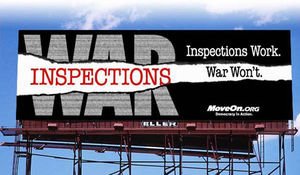
For the next few blogs, I intend to explore the ease of internet activism.
It has occurred to me that not everyone is familiar with the opportunities for involvement that are only a mouse-click away. The speed and ease of internet technologies has enabled Americans on the plus, plus side of the digital divide to have more opportunities to have their voices heard and participate in our representative democracy.
MoveOn!
My explorations into internet activism moved began three years ago when I began to get emails forwarded to me by people who belonged to MoveOn.org http://moveon.org/
By February 2003 it was getting more and more difficult to stay immersed in graduate studies. In a few of my seminars we discussed the pending war more than our dissertations. I remember joining a Yahoo group for my hometown where the pro's and con's Iraq war was the main topic. A few of my fellow students had forwarded emails from MoveOn.org that had access to petitions, video, and ad's asking that Bush not go to war.
You can read an excellent history of MoveOn.org at Wikipedia http://en.wikipedia.org/wiki/MoveOn
My familiarity with MoveOn.org and related internet activist portals grew in the time leading up to November 2004. MoveOn.org had stepped up emails to show support for John Kerry, to re-address the SwiftBoat campaign, and to just get out the vote in general.
As you can see from the image in this blog, internet activism easily moves back and forth between cyberspace and the real world. Internet activist organizations inform more people, build coalitions, and give options for not only getting your voice heard but also for hands on involvement.
One issue with the various internet activism portals is keeping poltical action committees straight, they seem to endlessly overlap. For example, I recall finding a link to the Americans for Change through MoveOn.org. Americans for Change is apparently assciated with America Votes http://americavotes.org/, which according to Wikipedia is non-partisan political organization formed in July 2003 and made up of a coalition of 527 grassroots political groups to coordinate their work in the swing states during the 2004 presidential election.
Not Much of a Joiner
I had never been to protest marches and vigils before. When I lived in Phoenix I saw the people who protested against homosexuality or people who protested the film "Rules of Engagement." I had friends who traveled to Florida to protest the WTO, but I was never involved in any of the rallies or protests.
My entrance into internet political activism increased as a skill in sorting through emails, responding to surveys, petitions, and submitting letters to representatives.
I remember watching the speeches for the anniversary of Roe VS. Wade in 2004 and wanting to participate in MARCH FOR WOMEN'S LIVES. Unfortunately, I had a conference and was out of town. It hurt to be so close to the action, but not really being the type of person who is compelled to join large groups of people for any reason (not even a rock concert). I wanted to get more involved in the action and was lucky to have found another outlet: http://www.meetup.com/
In 2005, I began to actually attend a Meet Up. This was my first adventure into what felt like an actual activist community, which I found via the web and my participation in internet activist outlets. I had joined two democratic Meet Ups and visited a few others in the DC metro area. The people who organized the Arlingtonians/Alexandrians for Virginia, began the group after the Howard Dean campaign fizzled.
The organizers have stayed affiliated with Democracy for America, the grassroots campaign initiated by Dean. They also became involved with the state-wide organization Democracy for Virginia. Hosting a Meet Up site was once free, when a charge was instituted; the organizers moved the group to a serviced hosted by Democracy for America Link Ups. http://www.dfalink.com/
Being new to the Metro and wanting to participate in the political process, I think it was a big help for me to feel connected to online community. I also think it was very therapeutic to believe that there were other people interested in democratic processes. Many will agree that these three years of war have contributed to a growing sense that what citizens want might not matter. People protest against war and it does not influence decisions. I actually got the feeling that Pres. Bush and his supporters found it a point of pride to be able to dismiss any voices of dissent.
Do More than Vote: Be Heard
But what did I do, what have I done to help put progressive grassroots politicians into office? What have I done to tell my representatives what I think is in my best interest? Aside from voting...before I joined internet activist communities: nothing! I believed myself to be too swamped in my studies and work to take the time to write a few letters, attend vigils, or go to protests.
Now, I probably send one letter to my representatives or sign a petition every other month. I tend to use Congress. org at http://www.congress.org/congressorg/home/to get the contact information for my representatives. I use this site to look over a bill or to read letters other people are sending.
I also go to sites like NARAL Pro-Choice America at http://www.naral.org/ or Planned Parenthood at http://www.plannedparenthood.org/ to sign petitions and find drafts to letters that are particular to my pet causes.
If you are busy, or you feel too busy, and you do not identify with the masses attending vigils or protests YOU CAN STILL GET YOUR VOICE HEARD!!
- Write a Letter
- Sign a Petition
- Talk to your Friends and Neighbors about your Letters and Petitions
PROS and CONS of Internet Activism
These are three easy ways to begin. Three ways made easy by internet activism sites.Below, I have outlined a few Pro's and Con's of internet activism.
Pro's
- stay in you home/office/library
- no need to interact with other people, unless so desired
- if you desire interaction you can comment on BLOGs or attend local event
- become a local leader by hosting events related to your cause of choice
find form letters with key points ready for you to tailor to your liking and send to your representative - sign up for TAKE ACTION alerts, this is particularly helpful when you have a busy life. This way when a bill is about to pass or for some reason people need to make an effort to get their voices heard to impact the situation you will be on call!
- quick access to petitions
- quick access to read legislation and find out where a bill is on its way to becoming law
because there are so many initiatives with action alerts and form letters, etc. - track several issues at once.
Con's
- may need to submit name and address
- more emails for your INBOX
- might lose interest in reading a bill or research issue on your own and begin to take someone else's word on the issue (how bizarre, what an idea!)
Tuesday, April 04, 2006
(Re)Claiming Focus-Perhaps
Focus is a key issue for any individual, group, or organization.
However, to have focus, an individual, group, or organization must first take time to reflect on what has already occured and what is desired for the future.
I am often amazed at my own lack of focus. In reflection, it seems that the pieces can all fit together as if there has been just one path all along.
But while planning it often seems there are many issues, many needs....I am not sure where I should put my energy next.
From time to time I get a call from a fellow do-gooder and we talk about various projects. This one would do better if they had a space, another would do better if they had books, another would do better if they had a regular membership, and yet another would do better if they had a coherent vision.
Ah, that vision. That focus. How to get it?
For an individual, it seems easy: "What do you want to do?"
But I have found it is really perhaps more a question of "What are you able to find a space to do?"
I would like to blame any lack of focus on the many messages in the news. There are too many things that needs fixing. From what I can tell from attending political meetings and non-profit board meetings, as well as from talks with students and friends, the things in this world that need fixing are just too big to tackle all at once...so why try.....OR even worse, in my opinion, are the people who have latched on to a philosophical or perspective-based point in a complex argument and have decided to leave it there. I blame the news for keeping us feeling like we have enough information to engage in a debate on HOW things should be or HOW we can "fix" our social problems.
Focus, I now think, can be reclaimed by finding a small patch of community and staying there to explore the many faceted dimensions of what it will take to make a difference right there where you are.
I am not suggesting that you stop watching or reading the news, I am only suggesting that you start getting more involved in the news that should be reported on what is happening in your own "back yard"--your own local politics and area do-gooders.
However, to have focus, an individual, group, or organization must first take time to reflect on what has already occured and what is desired for the future.
I am often amazed at my own lack of focus. In reflection, it seems that the pieces can all fit together as if there has been just one path all along.
But while planning it often seems there are many issues, many needs....I am not sure where I should put my energy next.
From time to time I get a call from a fellow do-gooder and we talk about various projects. This one would do better if they had a space, another would do better if they had books, another would do better if they had a regular membership, and yet another would do better if they had a coherent vision.
Ah, that vision. That focus. How to get it?
For an individual, it seems easy: "What do you want to do?"
But I have found it is really perhaps more a question of "What are you able to find a space to do?"
I would like to blame any lack of focus on the many messages in the news. There are too many things that needs fixing. From what I can tell from attending political meetings and non-profit board meetings, as well as from talks with students and friends, the things in this world that need fixing are just too big to tackle all at once...so why try.....OR even worse, in my opinion, are the people who have latched on to a philosophical or perspective-based point in a complex argument and have decided to leave it there. I blame the news for keeping us feeling like we have enough information to engage in a debate on HOW things should be or HOW we can "fix" our social problems.
Focus, I now think, can be reclaimed by finding a small patch of community and staying there to explore the many faceted dimensions of what it will take to make a difference right there where you are.
I am not suggesting that you stop watching or reading the news, I am only suggesting that you start getting more involved in the news that should be reported on what is happening in your own "back yard"--your own local politics and area do-gooders.
Friday, March 31, 2006
Juggling Life and Activism

People are not always on the ball.
Sometimes the ball rolls right over us.
In times when the ball slips away, or crushes you,
just think of Happy Bunny... Every now and then, its okay to say that it is all about YOU, and your loved ones. Be it work or grassroots activism, you just got to claim the time you need to be successful in your life.
Through life, that multifascited construct of shared reality, many of us will drop the ball or be crushed by it ;-)
I have dropped the ball. It happens.
Actually, I think I have dropped the ball more than a few times--this is part of what prompted me to focus on the topic of how to manage involvement with a busy working and personal life!
Births, deaths, business ventures, going the extra effort for work, needing a day to lay about the house.....these are just a few of the reasons I have heard from people on why they are not able to keep up with what they WANT to do, what they TRY to do, to promote Democracy in America.
Actually, I probably spent more time doing things that I hope will promote democracy than I probably should. This time spent going to vigils, to hear condidates, to documentaries, and managing Link-ups/Meet-ups may be all be in vain, and actually more a form of procrastination from other tasks (you know the tasks people pay me for...).
Somewhere in the Federalist Papers, Andrew Jackson said that America needed a representative government so that the majority of citizens could go about their daily lives participating in business and commerce.
The problem is that we, the majority of citizens, still need to be informed enough to tell our representatives what is best for our interests!
It generally takes massive numbers of voices to get representatives to listen (or, apparently, a good lobbist and a bunch of cash).
And so, people have come together in grassroots activism to get their voices heard and to support progressive, financially responsible candidates who they trust.
The issue, of course, is the time involved and all the bouncing balls life throws us.
From all the times that I have been the one who dropped the ball, and from all the times I have seen others drop the ball, I feel I can say this with some certainty:
TELL SOMEONE YOU HAVE DROPPED THE BALL.
This is what makes being part of a team really worth it.
Monday, March 27, 2006
Candidate Forum: Planning and Anticipating
Being involved in grassroots activism does not always meaning taking the lead, sometimes it means offering support.
The DFA meet-up in Falls Church is sponsoring a candidate forum on April 1st.
Attending the event are Congressional Candidates:
Shawn O'Donnell http://www.virginiadem.com/ for the 1st district
Judy Feyder http://www.judyfeder.org/ for the 10th district
Andrew Hursthttp://www.hurstforcongress.com/ for the 11th district
Ken Longmyer http://www.kenlongmyerforcongress.com/ for the 11th district
and the 8th congressional district incumbent Jim Moran http://www.jimmoran.org/
Democracy for America & Democracy for Virginia
Proudly Present
Proudly Present
THE 2006 CANDIDATE'S FORUM
APRIL 1, 2006
2:30 p.m. - 5:00 p.m.
2:30 p.m. - 5:00 p.m.
George C Marshall High School
2231 Leesburg Pike
Falls Church, Virginia
Featuring
Democratic Candidates
for
The Senate Congressional Candidates from
House Districts 1, 8, 10, 11
Featuring
Democratic Candidates
for
The Senate Congressional Candidates from
House Districts 1, 8, 10, 11
Being interested in what other link ups, AKA meetups, are doing in Virginia, I attended the Falls Church meeting in February. There were 8 people in attendance at the meeting. I think four were regular attendees to the Falls Church link up. The other four attendees were people I recogized from Democract for Virginia meetings. There is an overlap between the Democracy for America link up members and Democracy for Virginia (not all DFV are DFA). It seems that most of the people I have meet are also involved with other orgnizations, like the Virginia Grassroots Coalition, the Arlington County Democratic Committee (ACDC), and so on.
I have not heard much from the Falls Church Linkup organizers of this event, so I have written to check in and offered a list of things that I thought of that may be pertinent to ensuring a great candidate forum for all.
Staying in touch and reaching out when you need help, or when you have an idea, are essential to successful planning.
Monday, March 20, 2006
Social Change, Collective Action, Individual Reflection
Working toward social change, or any change that would benefit a collective, should be consider not just on the level of the group but also on an individual level. I would be interested to hear from people about how they have felt, seen witnessed a consciousness-change.
What are the steps?
- What activities may occur concurrently?
- What phenomenon tends to co-occur?
- How can we assess progress?
- How can we coordinate with others so that the change we work toward becomes a part of the system of day-today life?
The changes we make in how we see our world may benefit us immensely, not just in terms of our peace of mind and physical health, which are indeed fabulous and amazing things, but also in terms of our financial security!
To be productive for one's job or at school it helps if you have head a good night’s sleep, if your belly is full....to obtain these things it is best if you are paid a wage that promotes your ability to have a life where you can ensure your own productivity through your own well-being.
To work without sight of how to benefit yourself, to purchase without sight of how you benefit yourself is to stay locked into the dissatisfaction of the consumer society lifestyle: we do not know what we want, but we are sure that we do not have it. If we have a job and can keep our heads about total bankruptcy, then we are fine. If we have a little something stashed away, excellent. BUT, how does this cycle help us to advocate for change in our society that will help us move into a place where we are not just maintaining a sense of security for ourselves and our small family unit, but where we are building security for our neighborhood, our community, our nation, and our globe?
There are many issues in politics that get people worked up.
Those that make the most sense at this time are voting procedures and campaign reform. We want candidates who will not be owned by special interests and who will feel supported by the large constituency that is (possibly) best represented by a grassroots base.
But how to develop that grassroots base, get decent, fiscally responsible, progressive, pragmatic, and honest politicians and appointed officials in place? How to get an active group of voters who will PARTICIPATE in issues like a living wage, safe and cost efficient transportation and infrastructure, as well as affordable health care and coverage?
Good politicians in place is half of what we need in America; we also need active constituents who will offer ideas for solutions to social problems, people who will tell their stories that will influence policies that will ensure each citizen the means to be emotionally, physically, and financially secure!
For me, the question of how to get people to work together to help work on SOLUTIONS to social problems is a constant: mainly because of how my work as an instructor of education overlaps with the potential I see with Democracy for Virginia and the Democracy for America linkup meetings. I think that there needs to be a constant maintenance of relationships to build social networks and turn a group into a team, so that eventually each team can implement an action plan and assess their own progress as well as the progress of the network.
The issue many others may see with this part of the plan is that it is very time consuming. Instead of team building, you may be more likely to see are a few motivated individuals who are leading a group of loosely connected people rather than a strong collective of shared, interconnected actions and responsibilities. Unfortunately, when those few individuals are burned out there may be no one to take their place and the learning curve is so high that those who do take over can not pick up where things were left off.In addition to team building, there also needs to be personal reflection. While assessing how teams are doing while making coordinated actions for change, each team member needs to also be reflecting on:
- Motives
- Individual actions (what did they actually DO...this might differ from what others believed this person has contributed)
- Attitudes, and responses to how other people have behaved during group actions
Reflecting on your individual role may help soothe differences that have arisen over ego and help keep a person in sight of how what he/she wants and believes is best may or may not be in line with the team or the network of teams' mission may be.
Keeping track of what you want and why you want it as well as how you act and why you acted that way may help keep people involved as they reaffirm their presence in a group and as they develop working relationships that are based on participating and being connected to others!
I wonder how people improve their teaming relationships in other forums besides teaching or public activism. I wonder how we improve our teaming in our lives as family members as well as in the work world.
Do people want to change?
Do people want to improve conditions, or are they only interested in promoting their vision of the world?
I think that is the main question that needs to be addressed is HOW to help improve individuals' capacity to team together and work toward any collective goal.
Tuesday, March 14, 2006
James Webb visits Arlington Meet Up: a report
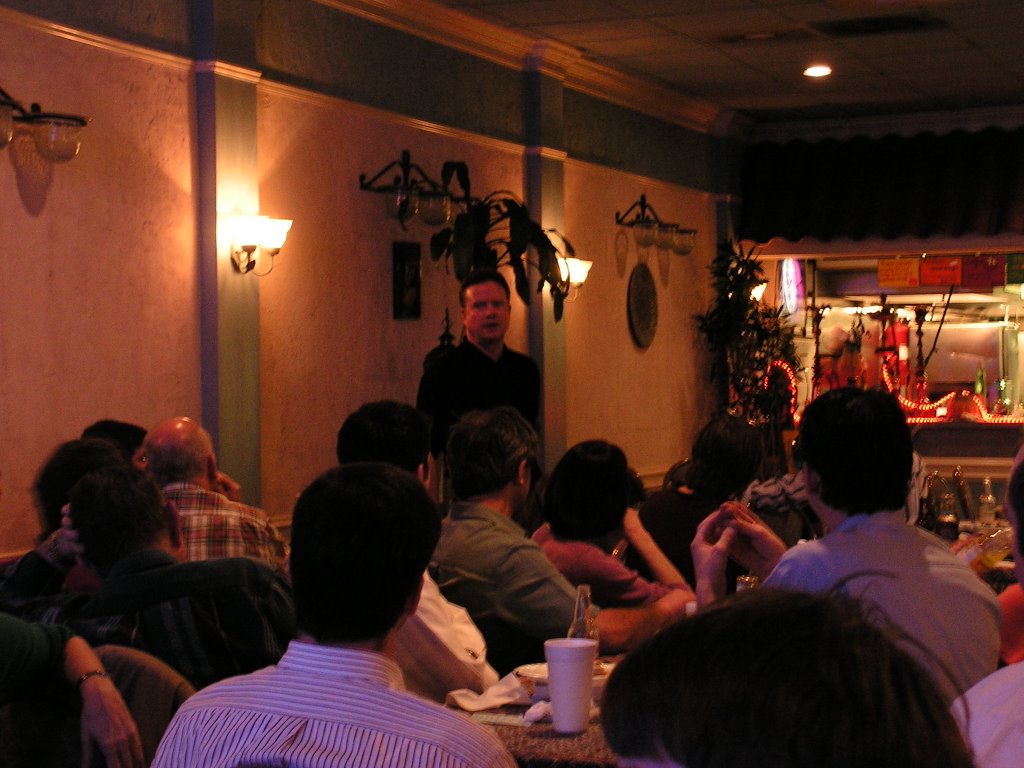
James Webb paid a visit to the Arlingtonians/Alexandria for Democracy Meet Up on Monday March 12, 2006.
The event was held at Attila’s near the Courthouse metro. James Webb spoke to the crowd of almost 60 people from 7:30 to 8:00, or slightly after, being very open to further questions and discussion on topics. As I have stated in an earlier blog, I will say again that I was impressed with Webb's position on health care as a right for every citizen. The audience asked questions regarding health care, education, the war in Iraq, the development of U.S. infrastructure, and anti-discrimination acts to protect gays and lesbians.
Webb is a very open and friendly speaker, he listened to each comment and often gave brief personal examples to illustrate his points. Webb began the discussion by talking about himself as being "born fighting" and having been raised from his childhood breakfast table with instructions on how to motivate people--how to be a leader.
The nuances of providing each citizen with health care, developing infrastructure, and for helping local schools to improve education--because he sees it as a local issue--will hopefully continue to be teased out as his campaign progresses. It seems clear that he supports individual rights, personal choice, equal economic opportunity, and diplomacy. We look forward to hearing his ideas on these and more in the future.
Go to the following sites for more on James Webb:
http://www.oursenate.com/
http://www.webbforsenate.com/
For a much more indepth report and analysis of James Webb at the Arlington Meetup please read this entry at Daily Kos:
http://www.dailykos.com/storyonly/2006/3/13/22362/0256
According to a poll on this site 57% or 15 pollsers DO NOT find Webb to be progressive, but believe he is good enough for Virginia.
With more effort in developing his message, I believe Webb can refine his progressive image and activate a grassroots campaign.
TIPS: the Meeting Hall
When entering into a public meeting, we must monitor one another to ensure civil discussion. We be there to think of solutions and not to just poke holes in the honest attempts made by others. I arrived at the following tips after reflecting on the DFA meet-up I co-hosted last night:
1. LISTEN, then SPEAK
It can be so hard to listen when we can not stand what the other person is saying, but without listening we will never REALLY know what that other person believes, wants, and will do!
2. BE REFLECTIVE!
Sometimes, just sometimes, its YOU. You are the key to your own frustration. To be frustrated, to recognize that and to hold on to it, while yet being able to understand that you are the one allowing yourself to be FRUSTRATED may motivate you enough to understand that it is not the other person's believes or behavior. Once you embrace the belief that you control your emotions you may become productive in taking action that may channel your frustration into more positive directions--don't just bitch about the way things are, start coming up with a list on the steps needs to CHANGE things!
3. BE HELPFUL!
Criticizing without offering suggestions is not only negative, it is regressive. We need to move toward action, we can not blame one another endlessly and take personal insult with each new idea that is different and perhaps even better than our own suggestion.
4. REALIZE THERE IS A PROCESS
Democratic process, while annoying at time, is there so that we the people do not exist at the whims of our leaders. Telling our leaders to make a change is not enough to make it happen. Laws will need to be reformed. What will it take to make a law reformed? Find out and help, don't just keep complaining.These are just a few tips for constructive conversation to change.
****
Last night I helped to organize a meeting for Arlington/Alexandria Democracy, a Democracy for America Meet-up.
At last night's meeting we had James Webb who is running for the honor to be a Senator for Virginia.
We also invited Linda Lindberg, Arlington County General Registrar of Voters, and Annie Connole, a voting machine technician.
I was expecting people to be passionate on the topics, but I was not expecting people to be hostile towards Linda and Annie. (I will write about my impression of James Webb in another entry. For now I will say that I was very impressed with his firm stand on Health care and his belief that it should be a right for every American to receive health care no matter their economic standing. The nuances of what this means in terms of quality and access as well as HEALTH INSSURANCE will be flushed out in the coming months.)
Voting reform will not change overnight. When it changes it will probably be through a long and time-consuming process of meetings and trouble-shooting!
Even if our guests were able to convince Linda and Annie that the machines were not trustworthiness, the process of putting that change into place would take time and effort. Linda and Annie would need allies and supporters to help get them materials, to make arguments, and, most importantly to file paperwork. A few people began the segment on voting machines by telling Linda that she had been "blathering away and not saying anything." I felt like she was instantly put on the offensive.
I was really hoping we would be able to ask Linda questions on how to address those worrisome glitches with the machines as well as the questionable processes-like not printing out each image of the vote during a recount.
I worry that in such public meetings people feel that the best way to make their point is to assert their dominance. While this might leave them feeling powerful, it does not lend itself to constructive dialogue for change.
We need to be critical FRIENDS, to work together, and to itemize the steps we need to take in order to convince officials like Linda that changes need to be made and the we need to HANG IN THERE with her to make sure the hard questions of HOW to make the change are addressed! According to the League of Women Voters in Arlington, one of the best strategies for quality assurance is to be certain that Voter Officials are trained and that there is sufficient oversight of maintain procedures!
When looking for solutions the League believes that: "Many of the risks inherent in the use of any system can be substantially reduced by improving management practices such as personnel training and by instituting rigorous administrative procedures." (Safeguarding Your Vote, K. L. Ceballos, The National Voter, October 2004.) http://www.capaccess.org/league/
While many people believe that there are too many places for things to go wrong and for crackers to mess up the voting machines, there is STILL the valid point that Linda and Annie made, which is that VOTERS NEED TO BE EDUCATED! People need to know WHERE the TO GO TO VOTE! People need to know WHEN TO VOTE! People also need to know more about CANDIDATES AND ISSUES so that when they do vote, they MAKE INFORMED VOTES!
There are no easy answers, there are no quick fixes. We need to be respectful of one another! We need to work together!
1. LISTEN, then SPEAK
It can be so hard to listen when we can not stand what the other person is saying, but without listening we will never REALLY know what that other person believes, wants, and will do!
2. BE REFLECTIVE!
Sometimes, just sometimes, its YOU. You are the key to your own frustration. To be frustrated, to recognize that and to hold on to it, while yet being able to understand that you are the one allowing yourself to be FRUSTRATED may motivate you enough to understand that it is not the other person's believes or behavior. Once you embrace the belief that you control your emotions you may become productive in taking action that may channel your frustration into more positive directions--don't just bitch about the way things are, start coming up with a list on the steps needs to CHANGE things!
3. BE HELPFUL!
Criticizing without offering suggestions is not only negative, it is regressive. We need to move toward action, we can not blame one another endlessly and take personal insult with each new idea that is different and perhaps even better than our own suggestion.
4. REALIZE THERE IS A PROCESS
Democratic process, while annoying at time, is there so that we the people do not exist at the whims of our leaders. Telling our leaders to make a change is not enough to make it happen. Laws will need to be reformed. What will it take to make a law reformed? Find out and help, don't just keep complaining.These are just a few tips for constructive conversation to change.
****
Last night I helped to organize a meeting for Arlington/Alexandria Democracy, a Democracy for America Meet-up.
At last night's meeting we had James Webb who is running for the honor to be a Senator for Virginia.
We also invited Linda Lindberg, Arlington County General Registrar of Voters, and Annie Connole, a voting machine technician.
I was expecting people to be passionate on the topics, but I was not expecting people to be hostile towards Linda and Annie. (I will write about my impression of James Webb in another entry. For now I will say that I was very impressed with his firm stand on Health care and his belief that it should be a right for every American to receive health care no matter their economic standing. The nuances of what this means in terms of quality and access as well as HEALTH INSSURANCE will be flushed out in the coming months.)
Voting reform will not change overnight. When it changes it will probably be through a long and time-consuming process of meetings and trouble-shooting!
Even if our guests were able to convince Linda and Annie that the machines were not trustworthiness, the process of putting that change into place would take time and effort. Linda and Annie would need allies and supporters to help get them materials, to make arguments, and, most importantly to file paperwork. A few people began the segment on voting machines by telling Linda that she had been "blathering away and not saying anything." I felt like she was instantly put on the offensive.
I was really hoping we would be able to ask Linda questions on how to address those worrisome glitches with the machines as well as the questionable processes-like not printing out each image of the vote during a recount.
I worry that in such public meetings people feel that the best way to make their point is to assert their dominance. While this might leave them feeling powerful, it does not lend itself to constructive dialogue for change.
We need to be critical FRIENDS, to work together, and to itemize the steps we need to take in order to convince officials like Linda that changes need to be made and the we need to HANG IN THERE with her to make sure the hard questions of HOW to make the change are addressed! According to the League of Women Voters in Arlington, one of the best strategies for quality assurance is to be certain that Voter Officials are trained and that there is sufficient oversight of maintain procedures!
When looking for solutions the League believes that: "Many of the risks inherent in the use of any system can be substantially reduced by improving management practices such as personnel training and by instituting rigorous administrative procedures." (Safeguarding Your Vote, K. L. Ceballos, The National Voter, October 2004.) http://www.capaccess.org/league/
While many people believe that there are too many places for things to go wrong and for crackers to mess up the voting machines, there is STILL the valid point that Linda and Annie made, which is that VOTERS NEED TO BE EDUCATED! People need to know WHERE the TO GO TO VOTE! People need to know WHEN TO VOTE! People also need to know more about CANDIDATES AND ISSUES so that when they do vote, they MAKE INFORMED VOTES!
There are no easy answers, there are no quick fixes. We need to be respectful of one another! We need to work together!
Friday, March 10, 2006
How Do We Change the World? Chalk4Peace

How do we change the world we see everyday?
Do we change it by drawing onto it the vision that pleases us most?
I watched a little girl and her father draw this sidewalk masterpiece at John Aaron's Chalk for Peace Center during Clarendon Days Oct. 2005.You may not be able to see it here, but the little girl drew the planet earth with people standing all along the outer circle of it, and people standing inside, people all around.
I wondered if this was a vision of the connected-ness of all people. We are one. What I do influences others.While we may be encouraged to believe that we are alone and that we must live to serve our own interests, this way of being will eventually be impeded by an awareness that what others do impacts me and therefore what I do impacts others. While caught in a perception of self as isolated and alone we may long for the connections we can make with friends, family, animals, plants.....chalk on pavement....we make a mark on the world and feel confident we can make change and that it will be harmonious to others as well.
If we are to be happy, we need to begin with out perception of connectedness. If we are to expect our society to serve the PUBLIC GOOD and maintain an equilibrium between the actions of people so that no one infringes on the another person's right to life, liberty, and the pursuit of happiness then each of us has a responsibility to engage in democratic processes. To vote, to be attentive to policy, to encourage DEBATE and DIALOGUE, to pick up the chalk and express out own will and to encourage others to do the same: this is how we change the world!?
This, and a little more....
Tuesday, February 21, 2006
TIPS: Personal Change and Political Activism
Could it be that we are what we do consistently.
And what is it that we do consistently? As a tool for transformation, I suggest consistent reflection of self and society. What have you been bitching about? When people are gathering at the bar, in the grocery line, or at a political meeting: what issues are they talking about? What headlines really grab you to where you sit up and say: someone should really do something about that.
After a week or a month or whenever you get a chance, review your journal of observations and reflectoions on issues of concern. Map out a sphere of influence and ask yourself what about this issue impacts my day to day life. What impacts my long term survivial.
Consdier who you might talk to about this concern: who shares your concern and who does not. Who out there in the world could help you.
Isolate a plan of action for those issues of concern.
What can be done.
What will I need to do it.
TO READ/THINK MORE:
Activism: http://en.wikipedia.org/wiki/Political_activist
Exploring Concepts of Personal Change and Political Activism: http://arts.anu.edu.au/sss/west/mc.html
Blog on Spiritual Activism: http://whispy.com/community/modules.php?name=News&file=article&sid=287
Note: What is the self, who are we, and why should we be good to one another? It is difficult to make laws without justification, but that means we need more listening and more dialogue and more SYNTHESIS of ideas, not the legislation of religion. Spirituality is a term I use to address the sense of connectedness and a way of cultivating myself (and others) into a way of compassion.
It is difficult to tease out issues of self, meaning, and to do so in a way that is thoughtful or at least thought-provoking and not one that shuts people down and closes them off or demands that they convert!
For more on the topic please see this web page and discussion board made by my dear friends at ASU, the SECULAR FREETHOUGHT SOCIETY : http://www.asu.edu/clubs/secular/
And what is it that we do consistently? As a tool for transformation, I suggest consistent reflection of self and society. What have you been bitching about? When people are gathering at the bar, in the grocery line, or at a political meeting: what issues are they talking about? What headlines really grab you to where you sit up and say: someone should really do something about that.
After a week or a month or whenever you get a chance, review your journal of observations and reflectoions on issues of concern. Map out a sphere of influence and ask yourself what about this issue impacts my day to day life. What impacts my long term survivial.
Consdier who you might talk to about this concern: who shares your concern and who does not. Who out there in the world could help you.
Isolate a plan of action for those issues of concern.
What can be done.
What will I need to do it.
TO READ/THINK MORE:
Activism: http://en.wikipedia.org/wiki/Political_activist
Exploring Concepts of Personal Change and Political Activism: http://arts.anu.edu.au/sss/west/mc.html
Blog on Spiritual Activism: http://whispy.com/community/modules.php?name=News&file=article&sid=287
Note: What is the self, who are we, and why should we be good to one another? It is difficult to make laws without justification, but that means we need more listening and more dialogue and more SYNTHESIS of ideas, not the legislation of religion. Spirituality is a term I use to address the sense of connectedness and a way of cultivating myself (and others) into a way of compassion.
It is difficult to tease out issues of self, meaning, and to do so in a way that is thoughtful or at least thought-provoking and not one that shuts people down and closes them off or demands that they convert!
For more on the topic please see this web page and discussion board made by my dear friends at ASU, the SECULAR FREETHOUGHT SOCIETY : http://www.asu.edu/clubs/secular/
Wednesday, February 08, 2006
Monuments
I've been to two kinds of funerals. Some were for those who brought us stability.
Such a funeral is a stately progression of somber faces, each person contemplative of the world the survivors have found themselves in. Sometimes this contemplation is personal, sometimes it is political, but it is always private. It is a hallowed, neutral ground, on which a gathering convenes in the spirit of "there, but for the grace of God, go I." It is a time for understanding and embracing continuity and balance, of considering the moments spent with the deceased, and the memories of them we carry forward. It is a celebration of tradition, of family, and of the culture in which we live. A quiet celebration, but one dedicated to continuity, and the hope that when our time comes, the voices that speak of us in remembrance are kind. It is fundamentally political; it is a monument to the status quo.
Then there are the funerals for those whose lives brought us change.
It is also a celebration of continuity, but on a much more personal scale. It is an expression of grief, but also of hope. Hope that the strength and power of the fallen may be borne with honor by the living. It is a time of reckoning; a time we ask what works have been accomplished, and what remains to be done. A time where we ask ourselves "what should we do," and realize that she will not be there to help answer for us; we must now answer this question for ourselves. A time where we look back to the life of the one who has passed for our answers. Even as we mourn the stillness that once was her living voice, we raise our own, and find our own strength in the expression of the passion that she raised in us. It is a funeral not to honor the continuity in which she lived, but the vision of hope that she moved us towards, despite tragedy and horrible loss. It is where we renew our faith in what the departed taught us. It is fundamentally personal; it is a monument to the human being.
Think about Coretta Scott King; think about her acts, her beliefs, and her legacy. Put aside all else, save her.
Now tell me, which monument did she deserve?
Such a funeral is a stately progression of somber faces, each person contemplative of the world the survivors have found themselves in. Sometimes this contemplation is personal, sometimes it is political, but it is always private. It is a hallowed, neutral ground, on which a gathering convenes in the spirit of "there, but for the grace of God, go I." It is a time for understanding and embracing continuity and balance, of considering the moments spent with the deceased, and the memories of them we carry forward. It is a celebration of tradition, of family, and of the culture in which we live. A quiet celebration, but one dedicated to continuity, and the hope that when our time comes, the voices that speak of us in remembrance are kind. It is fundamentally political; it is a monument to the status quo.
Then there are the funerals for those whose lives brought us change.
It is also a celebration of continuity, but on a much more personal scale. It is an expression of grief, but also of hope. Hope that the strength and power of the fallen may be borne with honor by the living. It is a time of reckoning; a time we ask what works have been accomplished, and what remains to be done. A time where we ask ourselves "what should we do," and realize that she will not be there to help answer for us; we must now answer this question for ourselves. A time where we look back to the life of the one who has passed for our answers. Even as we mourn the stillness that once was her living voice, we raise our own, and find our own strength in the expression of the passion that she raised in us. It is a funeral not to honor the continuity in which she lived, but the vision of hope that she moved us towards, despite tragedy and horrible loss. It is where we renew our faith in what the departed taught us. It is fundamentally personal; it is a monument to the human being.
Think about Coretta Scott King; think about her acts, her beliefs, and her legacy. Put aside all else, save her.
Now tell me, which monument did she deserve?
Thursday, January 26, 2006
Are you waiting for the filibuster?
I'm very much looking forward to it.
Just be ready, one way or another. No matter whether the filibuster succeeds or fails, November 2006 is going to have the turnout of a hotly-contested Presidential election. If you don't regularly vote in your Congressional or local elections, then WHY NOT? ARE YOU INSANE??? Do you have ANY IDEA how much of the ascension in presidential power is due to simple congressional deference?? Have you no...
*pauses*
Pardon me.
If you don't regularly vote in your Congressional or local elections, then please do so this November.
Thank you.
Just be ready, one way or another. No matter whether the filibuster succeeds or fails, November 2006 is going to have the turnout of a hotly-contested Presidential election. If you don't regularly vote in your Congressional or local elections, then WHY NOT? ARE YOU INSANE??? Do you have ANY IDEA how much of the ascension in presidential power is due to simple congressional deference?? Have you no...
*pauses*
Pardon me.
If you don't regularly vote in your Congressional or local elections, then please do so this November.
Thank you.
Friday, January 20, 2006
As a Citizen
As a citizen, I have responsibilities to my country. The most basic responsibility is to vote. If the United States is a “government of laws and not men” it is best if I am well informed and able to think critically: otherwise I may act based on the suggestions of others and not from my own thinking. The founding fathers of my government, in particular Thomas Jefferson, recognized the importance of having an EDUCATED citizenry and understood that it was not reasonable to entrust the education of citizens to parents and families. Public schools were formed to ensure an educated citizenry.
What else exists to educate us of our government? Newspapers, televised news broadcasts, blogs….each exists with a different story of what is happening in the world. Few of these sources address the bills before committees in the Senate or the House. When a bill is signed into law by the President, does it make front page news?
In a speech at Constitution Hall on January 16th, 2006, Former Vice-President Al Gore reminded his audience that we live in a country of “laws and not men.” He said that is it time for us to “disenthrall ourselves” from the many voices of television. We need more sources of information; we need a better check and balance on all segments of our national government.
As a citizen, it is my responsibility to gather information on issues and candidates and vote according to my own will and conscious, not according to party lines or a cult of personality. It is difficult to gather information on the bills being proposed on the Hill or even in my local government. Meetings are held last minute. Committee votes are not made public record…..there are many web sites that are watchdogs and help provide access, yet they are also a maze of information—information that maybe meaningless to many who are not trained in the nuances of the language and norms of government process.
I ask: how are we educated as a citizenry to participate? Do you as a citizen feel that there are adequate government forums for discussion or channels to information and transparency into proceedings? What is there to do? But to speak out and ask that those who we have voted for to do their jobs and to remain vigilant to remind them that their constituency is US the people and the laws we believe and trust to protect our rights to life, liberty, and the pursuit of happiness.
to read Al Gore's inspiring speak on civil rights and government responsibility, go to:http://rawstory.com/news/2005/Text_of_Gore_speech_0116.html
lets remember to Arm Freedom!
Tuesday, December 20, 2005
Democracy for Virginia
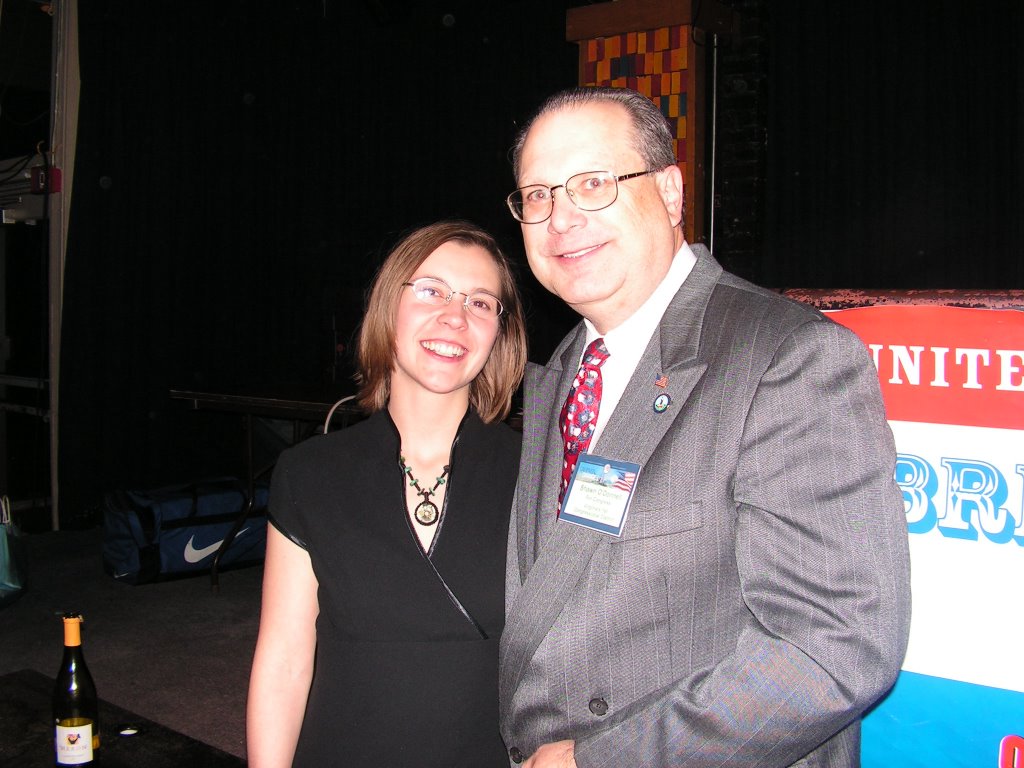
I began to test my own will for involvement 10 months ago by attending an Arlingtonian's for Democracy meetup.
Being an outspoken person filled with more opinion than may be prudent for me to share, I wrote an email to the meetup organizer's telling them in exacting detail how I thought they could improve the meeting. I was actually suprised to get a nice note in response saying, "you seem to know alot about this, maybe you would like to come and help us plan."
Being an academic interested in how adults come together in groups to address common causes believed it would be a good way to get involved and pursue my research interests.
Eight months later, after attending a few more meetings, Matt, the organizer for Arlingtonians for Democracy invited me to moderate a meeting for Democracy for Virginia. Okay I said.
It was a great meeting. I spoke with the organizations executive director, Jennifer Boysko, and we established some guidelines for helping one another keep the meeting running according to a set agenda.
When the agenda item for setting organizational goals come on the table, Jennifer gave me the floor and I moderated the discussion. I would offer an item for discussion and then take an order of speakers to address the issue, offer comments, make questions, or to make a motion for action items. It went well and within an hour the group of 22 people had an outline for action in the coming year.
At the end of the meeting there was a call for volunteers to take on duties to help make the plan come to life. I volunteered to be the social outreach coordinator. I know I have a limited amount of time, and I having done outreach work as the Vice President of the Graduate and Professional Association at ASU, I was sure I could handle the responsiblity and that perhaps more importantly I WOULD ENJOY IT!
Each of us has a limited amount of time in this world. We work, we sleep, we enjoy our friends and family, we enjoy our time alone to rest and recenter....but to make democracy work mean we have to donate our time. We need to follow the issues and have an informed opinion., but we also have to be willing to put ourselves out there if we are going to make things happen.
My first contribution as social coordinator was to organize a Holiday Party as suggested by board member Lee Diamond. After two conferenece calls and several flurries of emails we made it happen.
Subscribe to:
Posts (Atom)

.JPG)


